One Piece TCG vs Pokémon TCG as an Investment in 2026: Which Is the Smarter Buy?
Pokémon is the blue-chip of trading cards, but the One Piece TCG has been the breakout growth story. A 2026 head-to-head on liquidity, volatility, supply, and upside — and how to balance both in a collection.
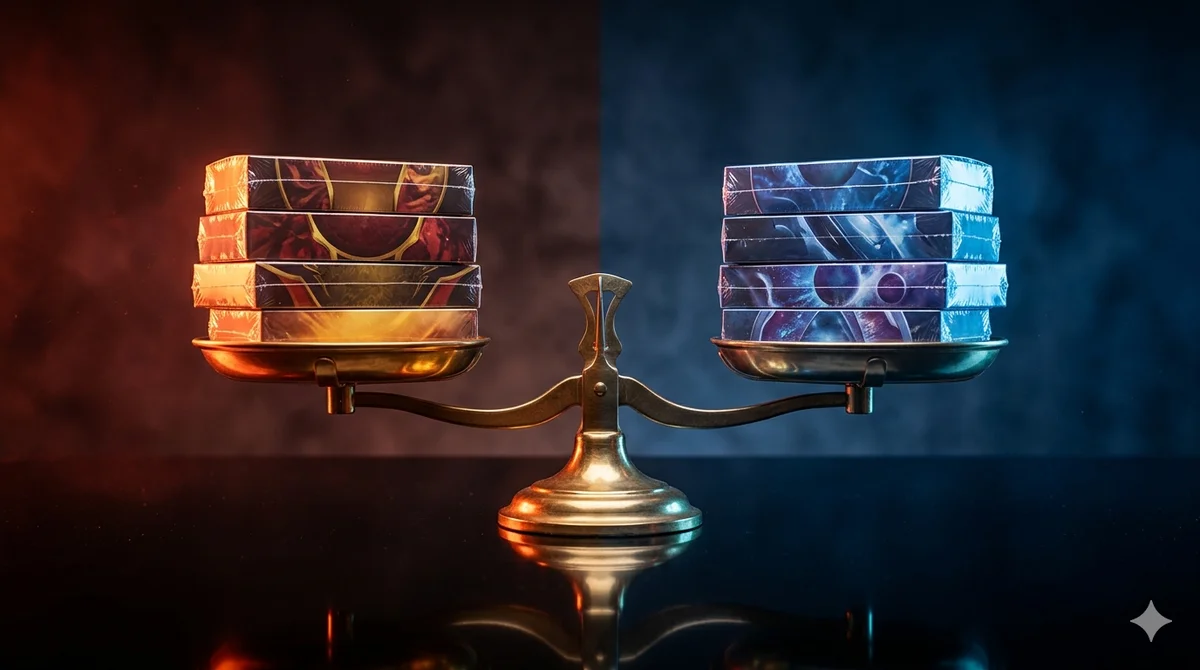
One Piece TCG vs Pokémon TCG as an Investment in 2026
🔵 INVESTING HEAD-TO-HEAD: Two of the biggest TCGs in the world, two very different risk profiles. This is a clear-eyed 2026 comparison — not which game is "better," but which behaves how, and how to use both. Pokémon brings 30 years of market history; One Piece has been the breakout growth story of the current boom.
Quick Answer: Pokémon is the blue-chip — deepest liquidity, longest track record, lowest risk, and the most reliable long-term store of value. One Piece is the growth play — younger, more volatile, with bigger swings in both directions and a passionate, fast-growing player base. For 2026, the disciplined approach isn't either/or: hold Pokémon as your stable core (anniversary momentum, the 30th Celebration, proven sealed appreciation) and treat One Piece as a higher-risk satellite for upside. Liquidity and your time horizon should decide the split, not hype.
Two of the biggest TCGs in the world, two very different investment profiles. Pokémon has 30 years of market history; One Piece has been the breakout success of the current TCG boom. This is a clear-eyed 2026 comparison — not which game is "better," but which behaves how, and how to use both intelligently in one collection.
Key Takeaways
- 🏦 Pokémon = blue-chip: Deepest liquidity, longest history, steadiest long-term value, lowest risk.
- 🚀 One Piece = growth: Younger market, higher volatility, bigger upside and downside, fast-growing playerbase.
- 💧 Liquidity gap: Pokémon is far easier to sell quickly at a fair price across more marketplaces.
- 📦 Supply matters: Both publishers reprint popular sets; reprints cap sealed appreciation — track print status before buying to hold.
- 🎂 2026 edge: Pokémon has a rare scheduled catalyst — the 30th anniversary, Worlds, and the 30th Celebration set.
- ⚖️ Best approach: Pokémon core + One Piece satellite, sized to your risk tolerance and time horizon.
⚡ Quick Navigation
The Two Profiles at a Glance
📌 TL;DR: Pokémon is the lower-risk, lower-volatility blue-chip; One Piece is the higher-risk, higher-upside growth asset. Neither is "better" — they're different tools.
| Factor | Pokémon TCG | One Piece TCG |
|---|---|---|
| Track record | 30 years | Younger (current-boom breakout) |
| Liquidity | Deepest in the hobby | Good and growing, but shallower |
| Volatility | Lower; firm floors | Higher; bigger swings both ways |
| Upside | Steady, broad | Sharper on the right card |
| Risk | Lower | Higher |
| 2026 catalyst | 30th anniversary, Worlds, 30th Celebration | Ongoing playerbase growth |
Think of it like investing generally: Pokémon is the index-fund core, One Piece is the growth stock. The smart question isn't which to own — it's how much of each.
Liquidity & Track Record
📌 TL;DR: Pokémon wins decisively. Three decades of data, the broadest buyer base, and the most marketplaces mean you can sell fast at a fair price. One Piece is liquid but shallower.
Liquidity — how fast you can sell at a fair price — is where the gap is widest. Pokémon has 30 years of price history, a global buyer base, and presence on every major marketplace. You can value and offload Pokémon cards quickly and confidently, which matters enormously when you need to exit a position.
One Piece is liquid and growing fast, but it's a younger market with less history. Pricing on niche cards can be thinner, spreads wider, and demand more concentrated in current chase cards. That's not a flaw — it's the profile of a younger asset class — but it means exits can be slower and pricier outside the most popular cards.
Volatility & Upside
📌 TL;DR: One Piece swings harder both ways. That's the source of its bigger upside — and its bigger risk. Pokémon's swings are tamer and its floors firmer.
One Piece has produced some of the most dramatic chase-card appreciation in recent TCG history, and also sharp corrections. Its higher volatility cuts both ways: more upside on the right card, more downside on the wrong one. For collectors who can stomach the swings and time entries well, that volatility is the opportunity.
Pokémon moves too — launch-week single deflation, set-specific spikes (see our Mega Evolution era recap) — but its floors are firmer and its blue-chip vintage is among the most stable collectibles anywhere. For 2026 specifically, Pokémon also has a rare scheduled catalyst: the 30th anniversary, with Worlds 2026 and the 30th Celebration set concentrating demand into the back half of the year.
Supply & Reprints
📌 TL;DR: Both publishers reprint to meet demand, which caps sealed appreciation. Always check a set's print/reprint status before buying sealed to hold — this is where new investors most often get burned.
The biggest trap in both games is reprints. When a set sells out, publishers often reprint to meet demand — which caps the appreciation of sealed product from earlier print runs. This has burned investors in both ecosystems.
Before buying any sealed product to hold:
- Check whether the set is still in active print or genuinely retired.
- Favor limited-window products (anniversary sets, special collections) over standard rotation for long holds.
- Remember that singles of true chase cards are often a cleaner scarcity bet than sealed boxes that may be reprinted.
For Pokémon, the 30th Celebration is a textbook limited-window play (the Celebrations 2021 precedent). For One Piece, scrutinize reprint announcements closely before committing to sealed — the younger market's reprint cadence can shift faster.
How to Balance Both in 2026
📌 TL;DR: Pokémon as the stable core, One Piece as a smaller satellite for upside. Size the split to your time horizon and how quickly you might need to sell.
A practical framework:
- Core (Pokémon): Your stable base — proven liquidity, the anniversary catalyst, and limited-window sealed plays like the 30th Celebration.
- Satellite (One Piece): A smaller, higher-risk sleeve for growth. Concentrate on genuine chase cards with real playerbase demand, and size it so a correction won't hurt.
- Match to horizon: Longer horizon and low liquidity needs → more room for One Piece's volatility. Shorter horizon or you may need to sell fast → weight Pokémon.
| Your situation | Suggested lean |
|---|---|
| Long horizon, high risk tolerance | More One Piece satellite |
| Need liquidity / shorter horizon | Heavier Pokémon core |
| New to TCG investing | Start Pokémon-heavy, add One Piece gradually |
💡 PokéWallet tip: Track both games side by side in one portfolio so you can see your real risk balance — not just totals, but how much sits in the volatile sleeve vs. the stable core. Do it in your PokéWallet portfolio.
Common Mistakes Investors Make (in Both Games)
📌 TL;DR: Buying the hype peak, ignoring reprint risk, over-concentrating in one card, and confusing what you love to collect with what holds value. These errors sink more TCG portfolios than picking the "wrong" game ever does.
The game you choose matters far less than the discipline you apply. The recurring mistakes are identical across Pokémon and One Piece:
- Buying the launch-week peak. Both markets overshoot on hype. The Mega-era launch curve — spike, then 20–40% deflation — repeats across TCGs. Patience is an edge.
- Ignoring reprint risk. Buying sealed product from a set that's about to be reprinted is the most common way to lose money in either game. Always check print status first.
- Over-concentrating. Putting too much into a single chase card — especially a volatile One Piece single — turns a hobby into a gamble. Spread risk.
- Confusing love with value. The cards you most enjoy collecting aren't always the ones that hold value. Both can be true, but don't assume they're the same.
- Neglecting liquidity. A card is only "worth" what you can actually sell it for, quickly, when you need to. This is where Pokémon's depth quietly protects you.
The throughline
Notice that none of these are game-specific. Whether you lean Pokémon, One Piece, or both, the discipline is the same: buy cooldowns not peaks, respect reprints, diversify, and keep enough of your portfolio liquid. Get that right and the core-vs-satellite split becomes a tuning decision, not a make-or-break one.
Frequently Asked Questions
Is Pokémon or One Piece the better investment?
Pokémon is the lower-risk blue-chip with deeper liquidity; One Piece is the higher-risk, higher-upside growth play. The smart approach uses both — Pokémon as the core, One Piece as a satellite — sized to your risk tolerance.
Why is liquidity so important?
Liquidity determines how fast you can sell at a fair price. Pokémon's 30-year history and broad buyer base make it far more liquid than the younger One Piece market — which matters most when you need to exit a position quickly.
Do reprints hurt card investments?
Yes — reprints increase supply and cap sealed-product appreciation. Always check a set's print status before buying sealed to hold, and favor limited-window products for long-term holds.
What makes 2026 special for Pokémon?
The 30th anniversary: Worlds 2026, PokémonXP, and the limited-window 30th Celebration set all concentrate collector demand in the back half of the year — a rare scheduled catalyst.
Is One Piece too risky for a beginner?
Not necessarily, but its higher volatility rewards experience. A common beginner approach is to start Pokémon-heavy for stability and add a small One Piece satellite as you learn how its market behaves.
Should I buy sealed or singles in each game?
In both, limited-window sealed is the cleaner long hold, while singles of genuine chase cards are a sharper scarcity bet. Avoid sealed product from sets at risk of reprint if your goal is appreciation.
Can I track both games in one portfolio?
Yes — PokéWallet lets you track Pokémon and One Piece side by side, so you can see not just your total value but how much of it sits in the stable core versus the volatile satellite.
Which game is more beginner-friendly for investing?
Pokémon, generally — deeper liquidity, more pricing data, and firmer floors make mistakes less costly while you learn. One Piece rewards experience and a higher risk tolerance.
Does owning both games reduce risk?
It can, if you size them deliberately — a stable Pokémon core with a smaller One Piece satellite spreads exposure across two markets that don't always move together. The key is intentional sizing, not owning a bit of everything.
Track Both Games with PokéWallet
Whether you lean Pokémon, One Piece, or both, PokéWallet lets you track your whole TCG portfolio in one place — so you can see your real risk balance at a glance.
- 🔔 Price alerts — get notified when cards in either game hit your target
- 📊 Live prices from TCGPlayer & CardMarket across both games
- 📈 Historical charts — compare how each game's market moves over time
- 💰 Portfolio tracking — see your stable core vs. volatile satellite split
- 💬 Live community discussion in our Discord
Stay Ready:
- 🚀 Start Free — No credit card required
- 📝 Read more TCG news, market analysis, and investment guides
- 📱 Follow @pokewallet.io for ongoing market coverage
This article is for informational purposes only and is not financial advice. Trading cards are volatile, illiquid in places, and can lose value. Past performance does not guarantee future results — never invest more than you can afford to lose, and always verify current pricing before purchasing.